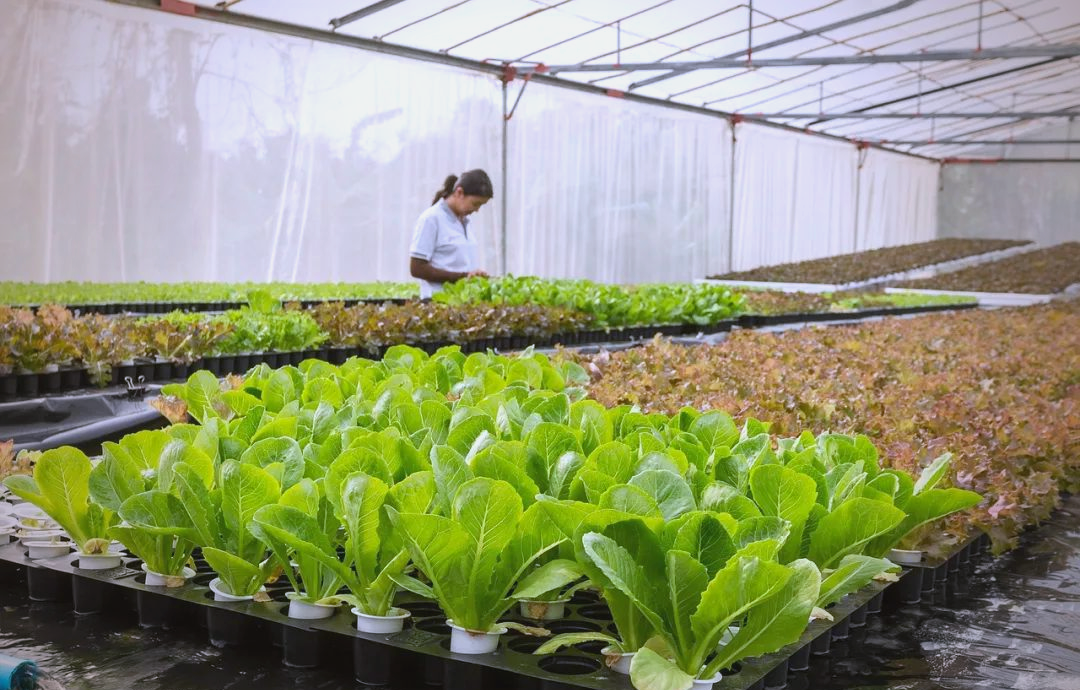
The cultivation of greenhouse vegetables in Linyi, Shandong Province needs to cope with the climate characteristics of low temperature in winter and high temperature and rain in summer, and form a scientific and practical technical system based on facility conditions and production reality. The following are the core technical points for optimizing the local environment:
1、 Facility selection and structural optimization
Choosing the appropriate shed type is the foundation for stable and high yield.
Sunlight greenhouse: It is recommended to have a hot-dip galvanized all steel column free structure with a span of 10-16 meters and a length of ≥ 80 meters, equipped with insulation blankets, rolling shutters, and ventilation systems, suitable for overwintering cultivation of warm crops such as tomatoes and cucumbers.
Plastic greenhouse: The span of a single shed is 8-12 meters, with a ridge height of 3.5-4.5 meters. A 60 mesh insect screen is installed at the ventilation opening to prevent the introduction of aphids, whiteflies, and other pests.
Old shed renovation: Upgrade the low rise earthen wall shed to be "mechanized", add agricultural machinery entrances and exits (width and height ≥ 2 meters), and improve the efficiency of mechanized operations.
2、 Accurate control of temperature, light, and humidity
Environmental management is the key to the success or failure of greenhouse cultivation.
1. Temperature control
Warm vegetables (such as tomatoes and eggplants) should be kept at 26-32 ℃ during the day and not lower than 10 ℃ at night; Leafy vegetables can withstand short-term low temperatures of 5 ℃, but still need to be protected against freezing damage.
In case of strong cooling weather, multi-layer covering (such as installing two layers of film inside) or temporary heating (hot air stove, warming block) should be used to cope with the cold wave.
In summer high temperature period, shading net, spray cooling, front and rear vents convection and other methods are used to prevent excessive growth or fruit falling when the shed temperature exceeds 35 ℃.
2. Lighting enhancement
Use EVA or PO functional film with an initial light transmittance of ≥ 85%, and regularly clean the shed film dust to increase the light transmittance by more than 30%.
Hanging aluminum plated reflective curtains on the back wall increases ground illumination by 20%, promoting fruit coloring and ripening.
Lianyin Angel uses red and blue LED fill lights for 4-6 hours daily to alleviate the problem of decreased photosynthetic capacity.
3. Humidity management
Promote subsurface drip irrigation to reduce surface evaporation, lower air humidity, and prevent high incidence of gray mold and downy mildew.
After watering, close the shed and heat up for 1-2 hours, then gradually open the air vent to remove moisture and control the relative humidity below 70%.
Spread natural moisture absorbing materials such as straw and straw between the beds to improve the microenvironment inside the greenhouse.
3、 Water and Fertilizer Science Operations
Adhere to the principle of "small quantity, multiple times, segmented supply" to achieve cost savings and efficiency improvement.
Before planting, apply 5-8 square meters of decomposed organic fertilizer per mu, combined with ternary compound fertilizer and trace elements such as calcium, boron, and zinc to prevent nutrient deficiency.
After slowing down the seedlings, apply alginate and biological agents to promote root strengthening and seedling growth; Control nitrogen before flowering to prevent excessive growth, and increase the application of phosphorus, potassium, and boron fertilizers to preserve flowers and fruits.
During the fruit swelling period, apply high potassium water-soluble fertilizer with water, combined with foliar spraying of 0.3% potassium dihydrogen phosphate+1% glucose solution, to improve quality and stress resistance.
Reduce root fertilization during the low temperature and low light period, and focus on foliar nutrition supplementation to avoid fertilizer damage to the roots.
4、 Plant management and crop arrangement
Reasonable agricultural measures can significantly improve yield and marketability.
High bed wide row planting is adopted, with a ridge spacing of 1.2-1.4 meters, which is conducive to ventilation, light transmission, and mechanical operation.
Timely pruning, branching, and heart picking to reduce nutrient consumption; After harvesting the cucumber at the top of the frame, it promotes lateral vine growth and extends the harvest period.
Tomatoes are recommended to be pollinated by bumblebees or with the assistance of vibrators to increase fruit setting rate and reduce the risk of hormone use.
Reasonably arrange crop rotation to avoid continuous cropping obstacles. It is recommended to cultivate winter crops once a year or adopt a dual cropping system in spring and autumn. In summer, leave time for deep plowing, sun drying, and greenhouse disinfection.
5、 Green prevention and control of pests and diseases
Adhere to the principle of "prevention first, comprehensive prevention and control" to ensure the safety and quality of vegetables.
Agricultural prevention and control: select disease resistant varieties, clean the countryside, remove residual branches and diseased leaves, and reduce initial sources of infection.
Physical prevention and control: Install 40-60 mesh insect nets at ventilation openings, and hang yellow and blue boards inside the shed to lure and kill aphids, whiteflies, and thrips.
Biological and chemical control: Priority should be given to using low toxicity agents such as azoxystrobin, chlorothalonil, and mycotoxin, alternating and rotating their use, and strictly implementing safety intervals.
The focus is on preventing and controlling common diseases and pests such as gray mold, downy mildew, powdery mildew, aphids, and whiteflies. The "Green Prevention and Control Technology Model for Cucumber Diseases and Pests" has been promoted in Linyi area, which can be used for reference.

Adress: Room D827, Innovation Building, High tech Industrial Development Zone, Linyi City, Shandong Province
WhatsApp:+86 19953986369
E-mail: mdy1662@163.com



